

In Traditional Chinese Medicine (TCM), the winter holiday season coincides with the peak of Yin, a time meant for stillness, conservation, and inward reflection. However, modern holiday culture demands peak Yang energy: late nights, rich foods, travel, and social obligation. Bridging this gap without burning out requires protecting your vital reserves (Jing), keeping your energy (Qi) flowing smoothly, and anchoring your spirit (Shen).

1. Setting Boundaries & Protecting Your Liver Qi
In TCM, the Liver governs the smooth flow of Qi and emotions throughout the body. When you overcommit, suppress frustration, or ignore your own needs to please others, Liver Qi Stagnation sets in, manifesting as irritability, tension headaches, neck and shoulder tightness, chest constriction, and digestive flare-ups.
Audit your calendar early: Treat your energy like a finite winter resource. Decline events out of obligation rather than genuine joy; saying "no" to others is saying "yes" to your Liver Qi, and your health.
Take "micro-retreats" during gatherings: Step outside into the air for five minutes, take a slow walk around the block, or excuse yourself to the restroom to take ten deep belly breaths. Physical movement immediately disperses stagnant Qi.
Release held tension: Before entering a stressful family dynamic, massage Liver 3 (Tai Chong), located on the top of the foot in the webbing between the big toe and second toe. Press firmly for 30–60 seconds on each foot to soothe frustration and promote emotional flow.
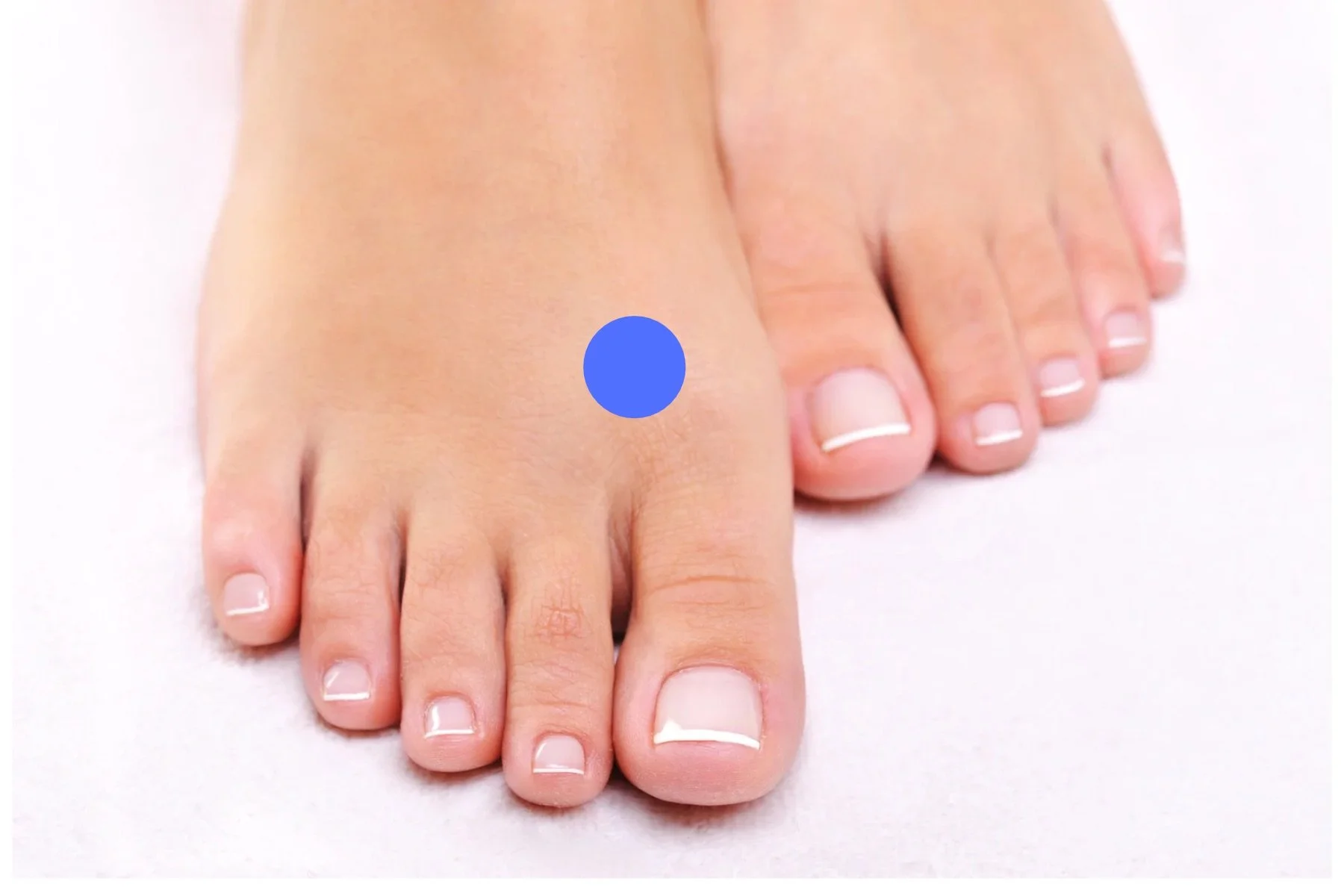
Liver 3 (Tai Chong) - Press to alleviate frustration, irritability, and promote overall emotional balance.
2. Guarding Your Immune System (Wei Qi)
Your immune system corresponds to Wei Qi (Defensive Qi), which circulates just beneath the skin and warms the muscles, acting as a shield against external pathogens ("Wind-Cold" or "Wind-Heat"). Wei Qi is generated by your digestive system and governed by the Lungs.
Cover the "Wind Gate": Cold wind enters the body most easily through the back of the neck and upper back,where key acupuncture points reside. Always wear a scarf outdoors and avoid sitting directly under cold air vents or drafts.
Keep your feet warm: The Kidney meridian, the root of your constitutional warmth and vitality, begins on the sole of the foot. Never walk barefoot on cold tile or hardwood floors; wear warm socks and slippers indoors.
Support with warming aromatics: Incorporate pungent, warming herbs into your cooking such as fresh ginger,scallions, garlic, cinnamon, and black pepper to gently circulate Wei Qi to the surface and expel early chills.
Acupressure boost: Tap or massage Stomach 36 (Zu San Li), located four finger-widths below the kneecap and one finger-width to the outside of the shinbone, to fortify both immunity and stamina.
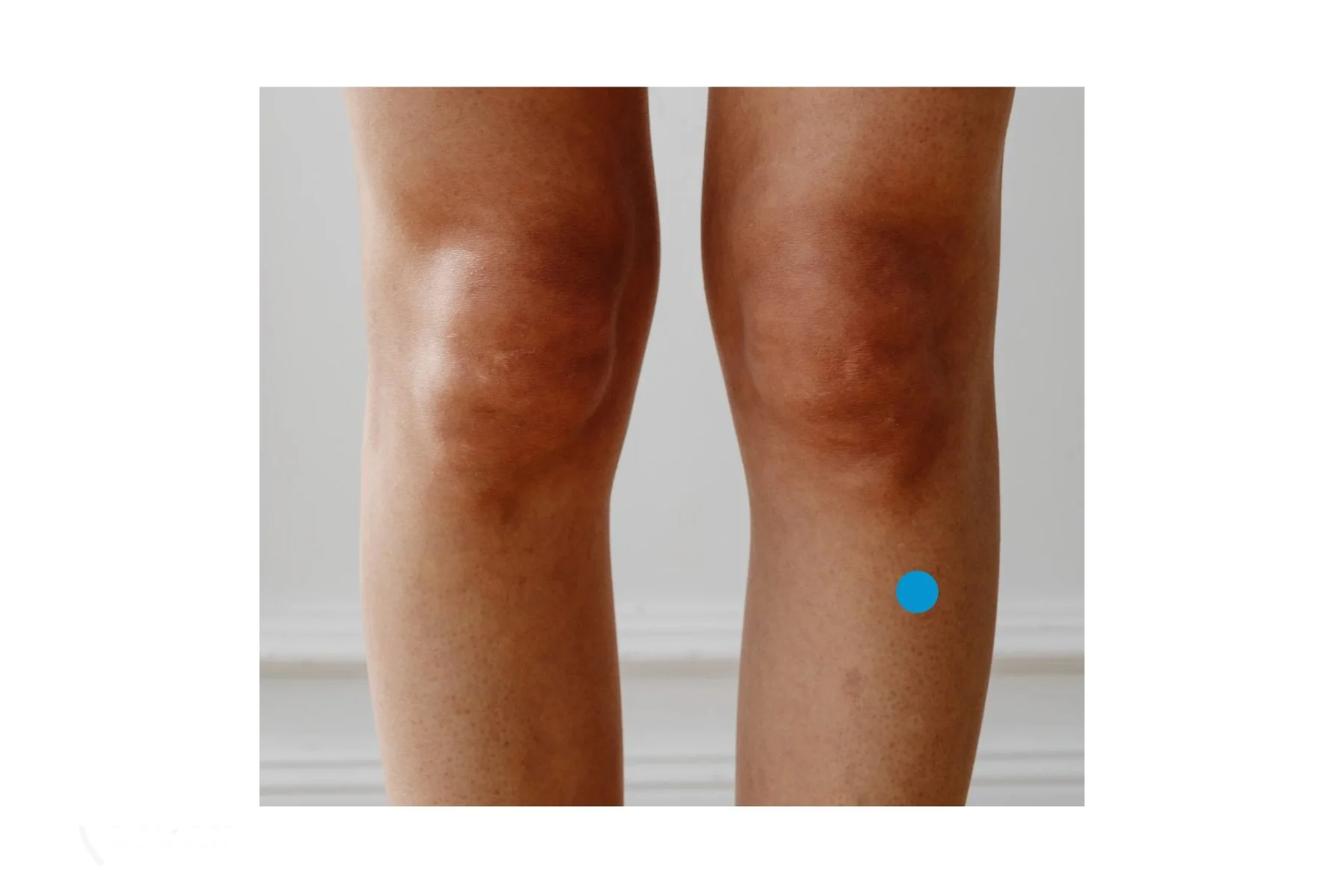
Stomach 36 (Zu San Li) press for overall health and wellness, including immune support.
3. Digestion & Overeating: Supporting Spleen & Stomach Qi
The Spleen and Stomach are the central pivot of your energy. In TCM, digestion is likened to a warm cauldron cooking soup. Heavy, greasy, sugary, and cold foods dampen that digestive fire, leading to Food Stagnation and Dampness felt as bloating, acid reflux, brain fog, sluggishness, and post-meal fatigue.
Favor warm, cooked foods: Even at holiday buffets, prioritize roasted vegetables, warm soups, stews, and cooked grains over raw salads, iced drinks, and cold desserts, which extinguish digestive fire.
Practice the 70% rule: Stop eating when you feel about 70% full. Leaving space in the Stomach allows Qi to churn and transform food efficiently.
Sip digestive teas after heavy meals:
Pu-erh tea or roasted barley tea: Cuts through grease, heavy meats, and rich cheeses.
Fresh ginger and orange peel (Chen Pi) tea: Moves stagnant Qi, relieves bloating, and settles nausea.
Hawthorn berry (Shan Zha) tea: Specifically breaks down heavy protein and fat stagnation.
Take a gentle post-meal stroll (100 steps) A slow 10-to-15-minute walk after dinner, an ancient TCM longevity habit, stimulates Stomach Qi to descend food properly.
Massage the belly in a clockwise direction to encourage peristalsis (gut movement.)
Apply heat pack over the belly for digestive support.
4. Restorative Sleep & Anchoring the Shen
Sleep occurs when your active daytime energy (Yang) returns inward to be nourished by your restorative nighttime energy (Yin), allowing your mind and spirit (Shen, housed in the Heart) to settle. Alcohol, late-night sugar, emotional overstimulation, and screen time stir up Heart Fire, causing racing thoughts, difficulty falling asleep, or waking between 1:00 AM and 3:00 AM (Liver time).
Buffer your alcohol and sugar intake: Alcohol is hot and damp in nature; it agitates the Heart and Liver,fragmenting deep sleep even if it initially makes you drowsy. Alternate every alcoholic drink with a full glass of warm or room-temperature water, and stop drinking at least three hours before bed.
Soak your feet before bed: Immerse your feet and ankles in warm water (add a splash of Epsom salt or a few slices of fresh ginger) for 15 minutes before sleep. This draws excess Yang energy down from an overactive head and warms the Kidney meridian.
Calm the Heart meridian: Gently press Heart 7 (Shen Men / "Spirit Gate"), located on the inner wrist crease aligned with the pinky finger, for one minute on each wrist while breathing slowly before turning off the lights.
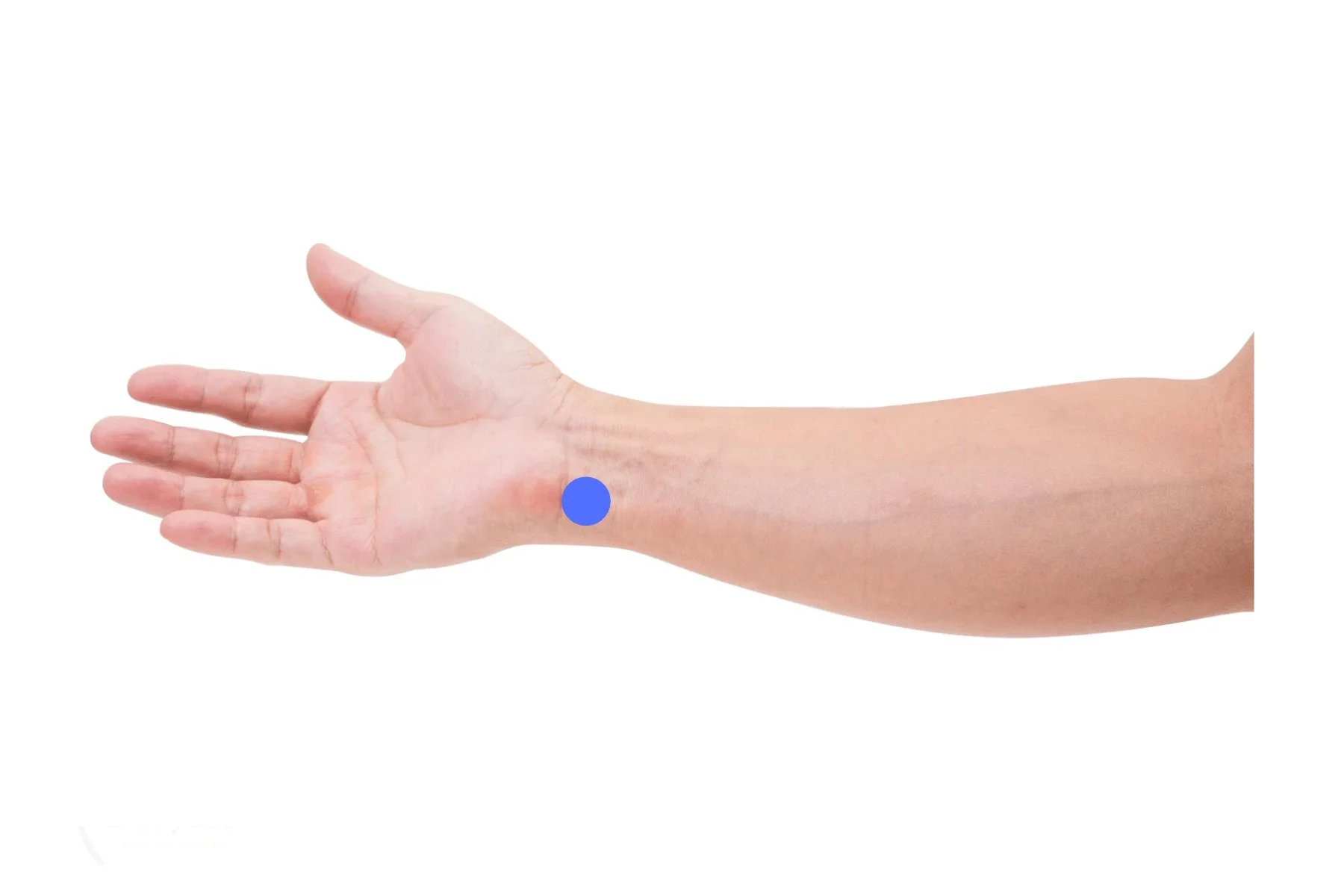
Heart 7 (Shenmen) helps quiet the mind and nervous system, and relax the body.
5. Cultivating Gratitude in a Season of Excess
TCM views excess materialism, endless shopping, and sensory overload as forces that scatter Heart Qi and deplete Kidney essence, leaving you feeling hollow, anxious, and ungrounded despite abundance. Winter belongs to the Water element (Kidneys), which invites us to turn inward, distill what truly matters, and rest in quiet sufficiency.

Shift from acquiring to nourishing: Replace one material gift exchange with a shared, screen-free experience, a home-cooked meal, a quiet walk in nature, or a handwritten letter. Genuine connection directly nourishes Heart Qi.
Practice evening "storing": Before sleep, place one hand over your Heart (center of the chest) and one over your lower abdomen (Dan Tian, two inches below the navel). Name three simple, non-material moments from the day that you feel grateful for. This practice gathers scattered energy back into your core.
Honor the rhythm of winter: Give yourself permission to slow down, go to bed 30 minutes earlier, and embrace quiet evenings. True abundance in TCM comes not from external accumulation, but from deep internal reserves.

TCM Holiday Kitchen: Simple Recipes & Herbal Teas
In Traditional Chinese Medicine (TCM), food and herbs are daily medicine. During the winter holidays, cooking with warming, aromatic, and gently nourishing ingredients helps stoke your digestive fire (Spleen and Stomach Qi),strengthen your defensive shield (Wei Qi), and anchor your spirit (Shen) for deep sleep.
Digestion
Disperses Food Stagnation, warms the Middle Burner, dries Dampness
Dried tangerine peel (Chen Pi), hawthorn berry (Shan Zha), fresh ginger, roasted barley. (You can purchase at most Asian Food Markets or your local Acupuncturist/Herbalist :)
Immunity
Releases the exterior, warms Lung & Kidney Qi, tonifies blood
Scallion whites, fresh ginger, cinnamon twig, goji berries, astragalus (Huang Qi)
Sleep
Nourishes Heart Yin and Blood, anchors floating Yang, calms Shen
Jujube dates (Da Zao), chamomile, lily bulb (Bai He), black sesame, lotus seeds

Recipes for Digestion, Immune Support, and Sleep
1. Digestion & Overeating Relief
Use these recipes after heavy, rich, or sugary holiday meals to relieve bloating, sluggishness, and acid reflux.
Chen Pi & Hawthorn Digestive Tea (Food Stagnation Relief)
Dried aged tangerine peel (Chen Pi) regulates Qi and dries dampness, while hawthorn berries (Shan Zha) specifically break down heavy meats, fats, and dairy.
Ingredients:
1 tablespoon dried hawthorn berries (Shan Zha)
1–2 strips dried tangerine peel (Chen Pi) — or 3 strips of fresh organic orange peel
2 thin slices fresh ginger
2 cups water
Instructions: Simmer all ingredients in a covered pot over low heat for 10–15 minutes. Strain and sip warm 20–30 minutes after a heavy meal. (Note: Avoid if you have severe acid reflux on an empty stomach, as hawthorn is sour).
Spiced Squash & Ginger Congee (Gentle Morning Reset)
Congee (rice porridge) is the ultimate TCM recovery food. Long-simmered rice builds Spleen Qi without taxing digestion, while squash adds natural sweetness to soothe the Stomach.
Ingredients:
½ cup white jasmine or short-grain rice, rinsed
5 cups water or mild bone/vegetable broth
1 cup cubed squash such as butternut squash
3 coin-sized slices fresh ginger
Pinch of sea salt and a dash of ground cinnamon
Instructions: Bring all ingredients to a boil, then reduce to the lowest simmer, partially covered, for 45–60 minutes until creamy and thick. Remove the ginger slices before serving warm.
2. Immune Protection (Wei Qi Builders)
Sip these at the first sign of a chill, after cold-weather travel, or throughout the week to keep your defenses resilient.
"Three-Treasure" Wei Qi Broth
This simple herbal stock combines astragalus (Huang Qi) to tonify defensive Qi, shiitake mushrooms to support immune resilience, and ginger to circulate warmth to the surface.
Ingredients:
4–5 dried astragalus root slices (Huang Qi) available at Asian markets or herbal shops
4 dried shiitake mushrooms
4 slices fresh ginger
2 cloves garlic, smashed
6 cups chicken or vegetable broth
Instructions: Simmer gently for 30–40 minutes. Discard the tough astragalus slices (they are woody and inedible),slice the rehydrated shiitakes, and drink as a warming mug of broth or use as a base for holiday soups. (Note: Pause astragalus if you already have an acute fever or active sore throat).
Scallion White & Fresh Ginger "Chill-Chaser" Tea
In TCM, the white root end of the scallion (Cong Bai) paired with fresh ginger (Sheng Jiang) opens the pores gently to expel early-stage Wind-Cold before it settles deeper into the body.
Ingredients:
3 scallion whites (including the little root hairs if clean), bruised with the flat of a knife
4–5 slices fresh ginger
1 teaspoon raw honey or brown sugar (optional, to harmonize)
2 cups water
Instructions: Simmer the scallions and ginger in water for 8–10 minutes. Strain into a mug, stir in honey, drink hot,and immediately bundle up under a blanket to encourage a light, warming sweat.
3. Restorative Sleep & Shen Calming
Enjoy these in the evening to transition from holiday stimulation into quiet winter stillness.
Jujube Date & Chamomile Shen-Calming Tea
Red jujube dates (Da Zao) nourish Heart and Spleen Qi and blood, working alongside floral chamomile to ease racing thoughts and emotional overwhelm.
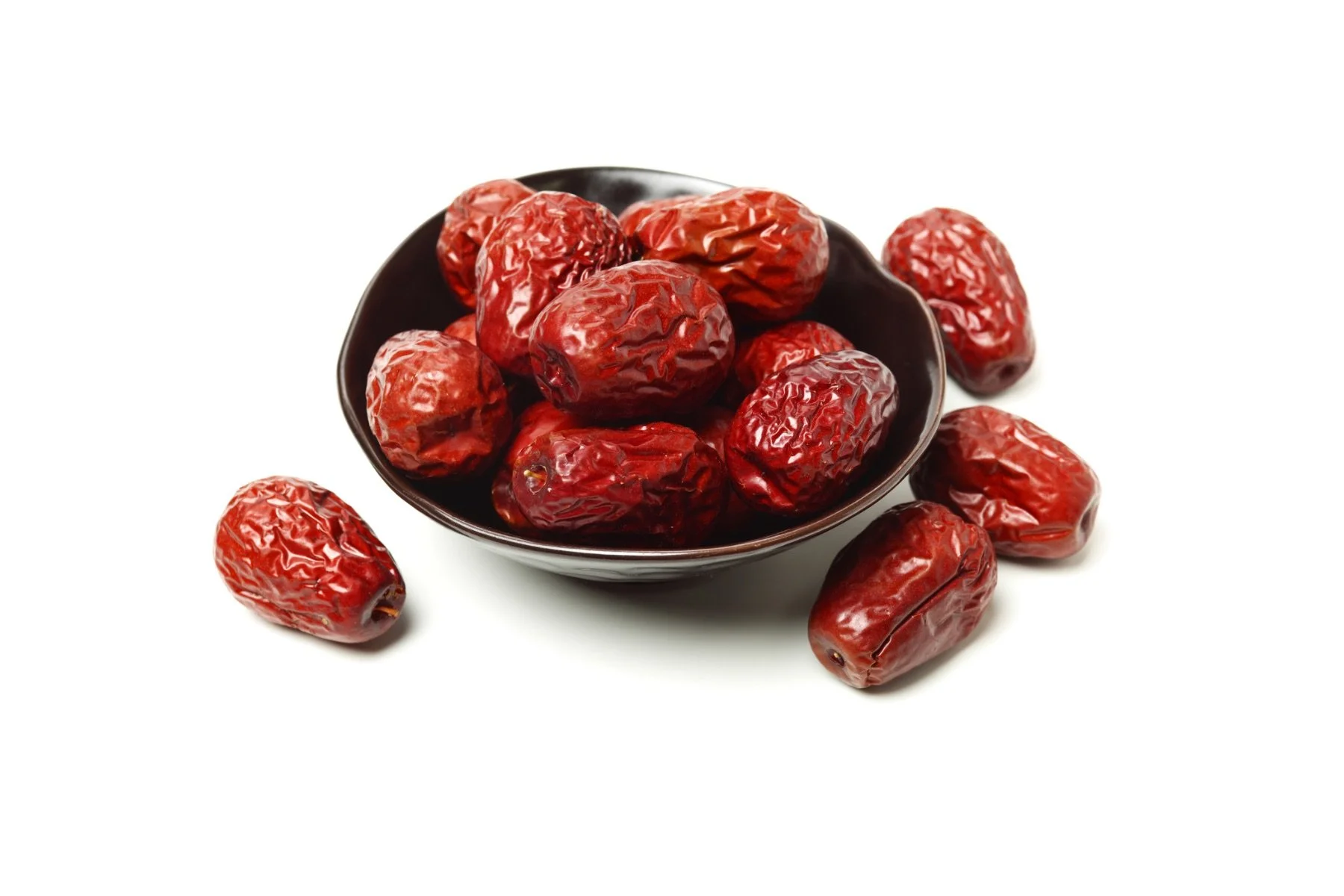
Jujube (Da Zao) tonifies the Qi, and nourishes the spirit
Ingredients:
4 dried red jujube dates, pitted and sliced open
1 tablespoon dried chamomile flowers (or 1 chamomile tea bag)
½ teaspoon dried goji berries (optional, for Liver/Kidney Yin)
1½ cups boiling water
Instructions: Place the sliced jujubes in a mug or teapot and pour boiling water over them. Steep covered for 5 minutes, then add the chamomile and goji berries and steep another 5 minutes. Sip warm 1 hour before bed, and eat the softened dates at the bottom of the cup.
Warm Spiced Black Sesame & Almond Milk
Black sesame seeds tonify Kidney Yin and Essence—the deep foundational anchor needed to keep restless Yang energy grounded at night.
Ingredients:
1 cup unsweetened almond or oat milk
1 tablespoon roasted black sesame paste (or finely ground black sesame seeds)
¼ teaspoon ground cardamom or cinnamon
1 teaspoon maple syrup or raw honey
Instructions: Whisk all ingredients in a small saucepan over medium-low heat until steaming and smooth (do not boil). Pour into a warm mug and drink slowly before bedtime.
Quick Pantry & Brewing Tips for Patients
Use glass, ceramic, or stainless steel: Avoid reactive aluminum pots when simmering TCM herbs and roots, as metals can interact with the plant compounds.
Always cover while steeping: Aromatic herbs like ginger, tangerine peel, and chamomile rely on volatile essential oils for their medicinal action—keeping a lid on your pot or mug traps those therapeutic oils in your tea.
Drink warm, never iced: Even nourishing herbal teas lose much of their digestive benefit if poured over ice; body-temperature or warm liquids allow the Stomach to absorb them effortlessly.
In a culture of ‘do more’, ‘acquire more’, ‘eat more’, take this holiday season to slow down, appreciate the abundance you already have, and nourish your Heart through authentic connection with your community.
Happy Holidays!
* The information presented on this blog is intended for informational and educational purposes only. It should not be considered a substitute for professional medical advice, diagnosis, or treatment. Always consult your physician or another qualified healthcare provider if you have any questions regarding a medical condition or treatment.